
BYD’s Atto 1 was already the cheapest EV in Australia, and now it’s the first to sell for less than $20,000 with news of a stunning special offer that drops the price of the Essential variant to just $19,990 driveaway nationwide.
The winner of the Wheels 2026 Best Small Car Value award is now being touted as the most affordable new car of any sort in the country. Its closest rival, the Kia Picanto Sport Manual, is going for $19,190 – but crucially, that’s the listed base price, not the driveaway figure.
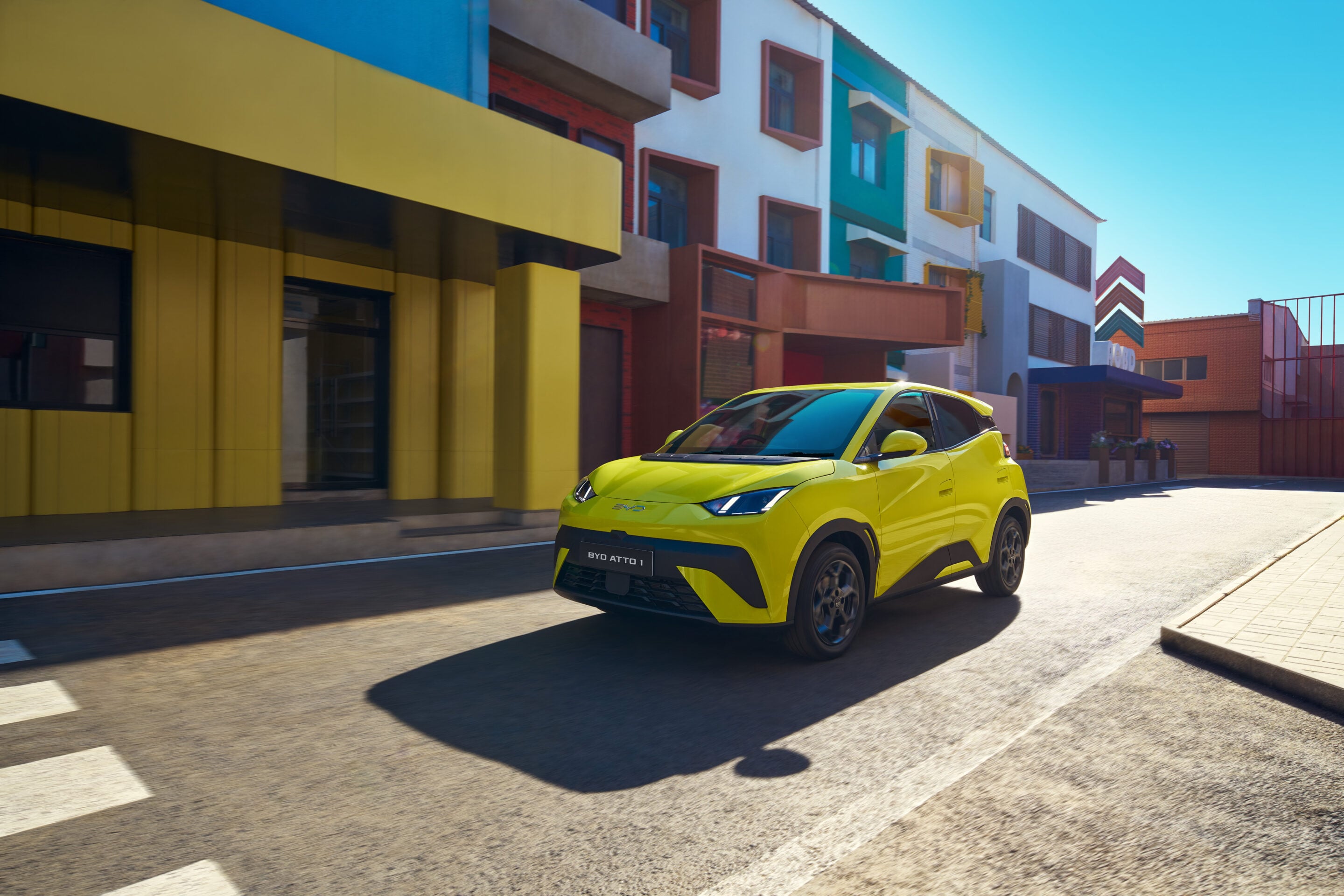
BYD Australia chief operating officer Stephen Collins said the brand has dropped the price from $23,990 plus on-roads partly in response to the cost of living crisis Aussies are experiencing.
“At a time when Australian families are carefully considering every household expense, we’re committed to making vehicle ownership more attainable,” he said in a company statement, adding that the discount “demonstrates our commitment to delivering outstanding value without compromising on technology, safety or quality.”
The Atto 1 Essential’s incredible bang for your buck wasn’t the only reason it won the Wheels award. Our judges also hailed its surprisingly punchy and mature driving dynamics and interior space, which is unexpected in a car of this size.
“The Atto 1 is a genuinely usable electric hatchback at a price that rivals – or undercuts – many ICE competitors, making it one of the most compelling value propositions on the market,” we wrote.
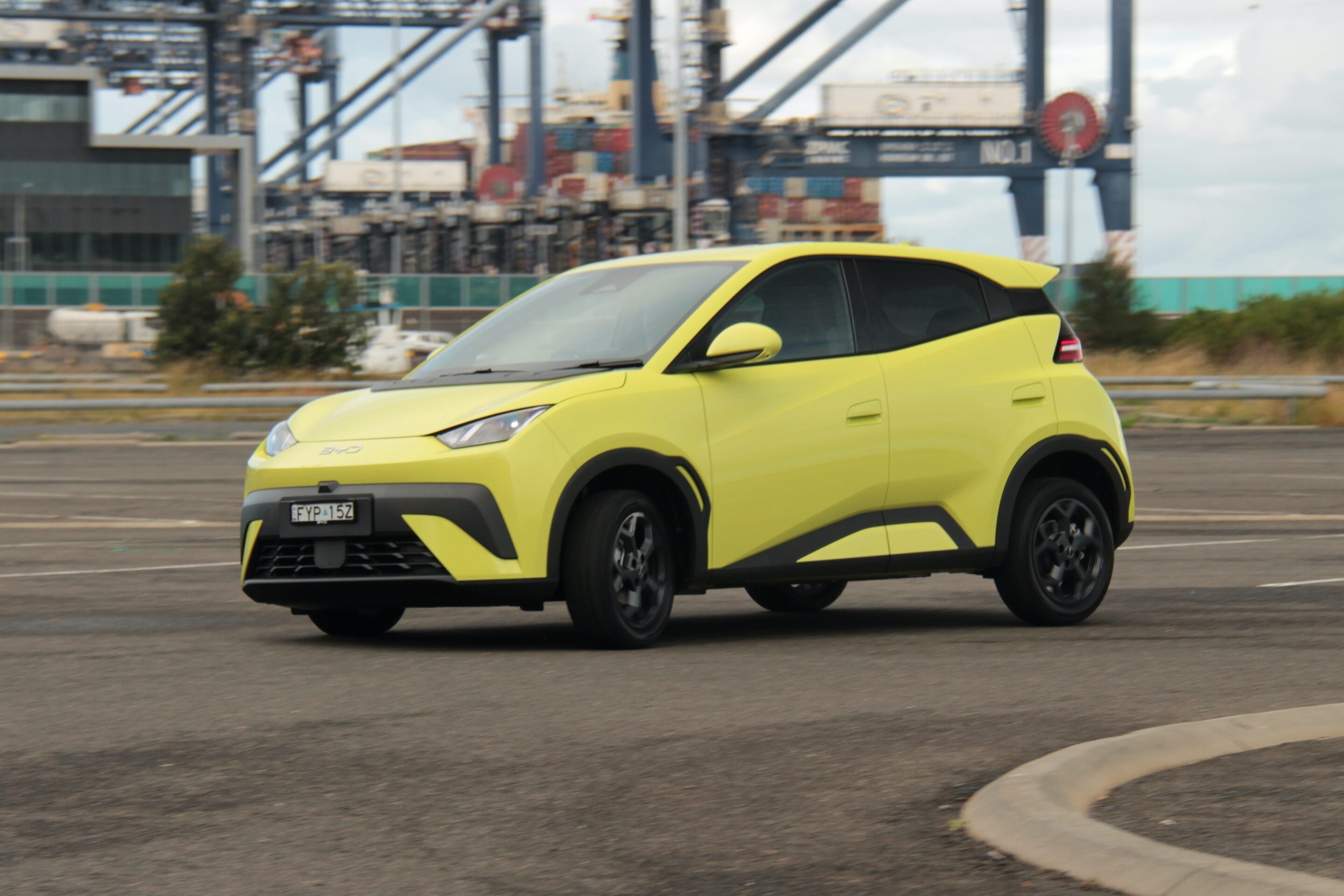
“The Atto 1 is also more accomplished to drive than you might expect. Instant electric torque makes it feel lively around town, while its compact dimensions and light controls make parking and urban driving effortless. The suspension delivers a comfortable ride with enough composure to inspire confidence beyond the city limits, giving the car a surprisingly mature feel.”
That $19,990 outlay will get you a single electric motor with outputs of 65kW and 175Nm, with a 31kWh battery that delivers a claimed WLTP range of 220km. There’s also a six-year, 150,000km warranty, with a five-year service cost of $1391.
MG has detailed its upcoming MGU9 EV electric ute ahead of its Australian launch likely later this year, confirming a 430km driving range, 3500kg towing capacity and grunt for days. Australia will be the first market globally to launch the electric ute, which has been designed and tested with local conditions in mind.
Positioned more as a lifestyle vehicle than a traditional workhorse, the MGU9 EV “combines everyday practicality with the capability for weekends away, from carrying bikes and camping gear to towing a caravan, boat or trailer”, according to the brand.
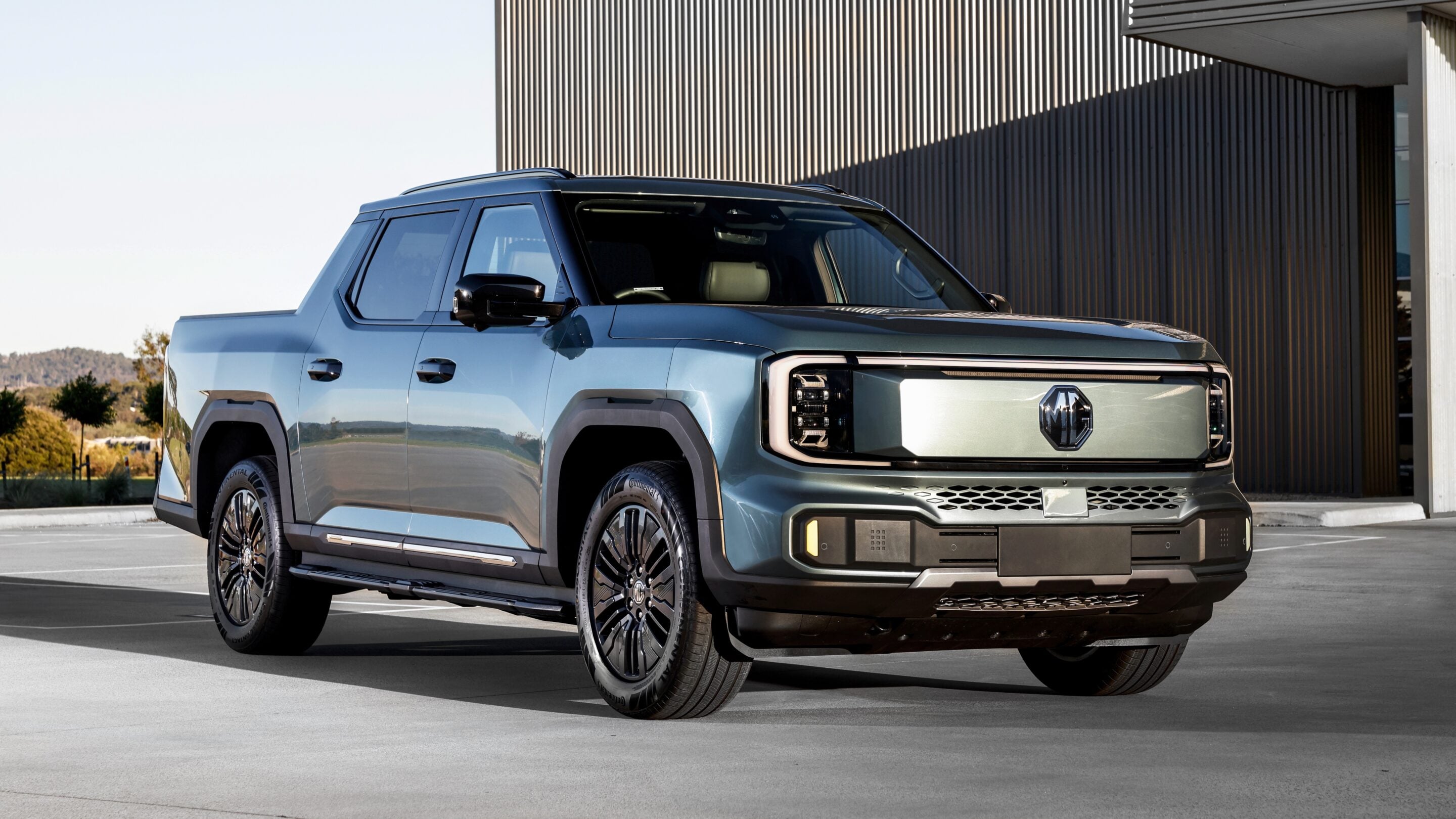
Power comes from a 102.2kWh LFP battery feeding a dual-motor set up that provides combined outputs of 325kW and 700Nm. According to MG, that’s enough grunt for the MGU9 EV to sprint from 0-100km/h in just 5.8 seconds, while its WLTP-rated driving range is 430km.
Importantly for many ute buyers, the MGU9 EV has a 3500kg braked towing capacity, which matches the benchmark figure offered by many of the country’s best-selling diesel-powered dual-cab utes. Unbraked towing capacity is rated at 750kg, and its payload is 685kg.
Remarkably, the electric MG also features four-wheel air suspension with variable ride height control, promising a more comfort-focused driving experience than conventional leaf-sprung utes.
The MGU9 EV supports DC fast charging at up to 115kW for a 20-80 per cent charge in a claimed 42 minutes. AC charging at 11kW is also available, while there’s also 6.6kW vehicle-to-load (V2L) capability through the external charging port and 2.2kW outlets in the cabin.
MG says the U9 EV’s tray can accommodate a standard-sized pallet, while there’s also a large 236-litre boot at the front of the vehicle. Inside, the MGU9 EV features two 12.3-inch displays, wireless Apple CarPlay and Android Auto, a 15W wireless phone charger and an eight-speaker JBL sound system.
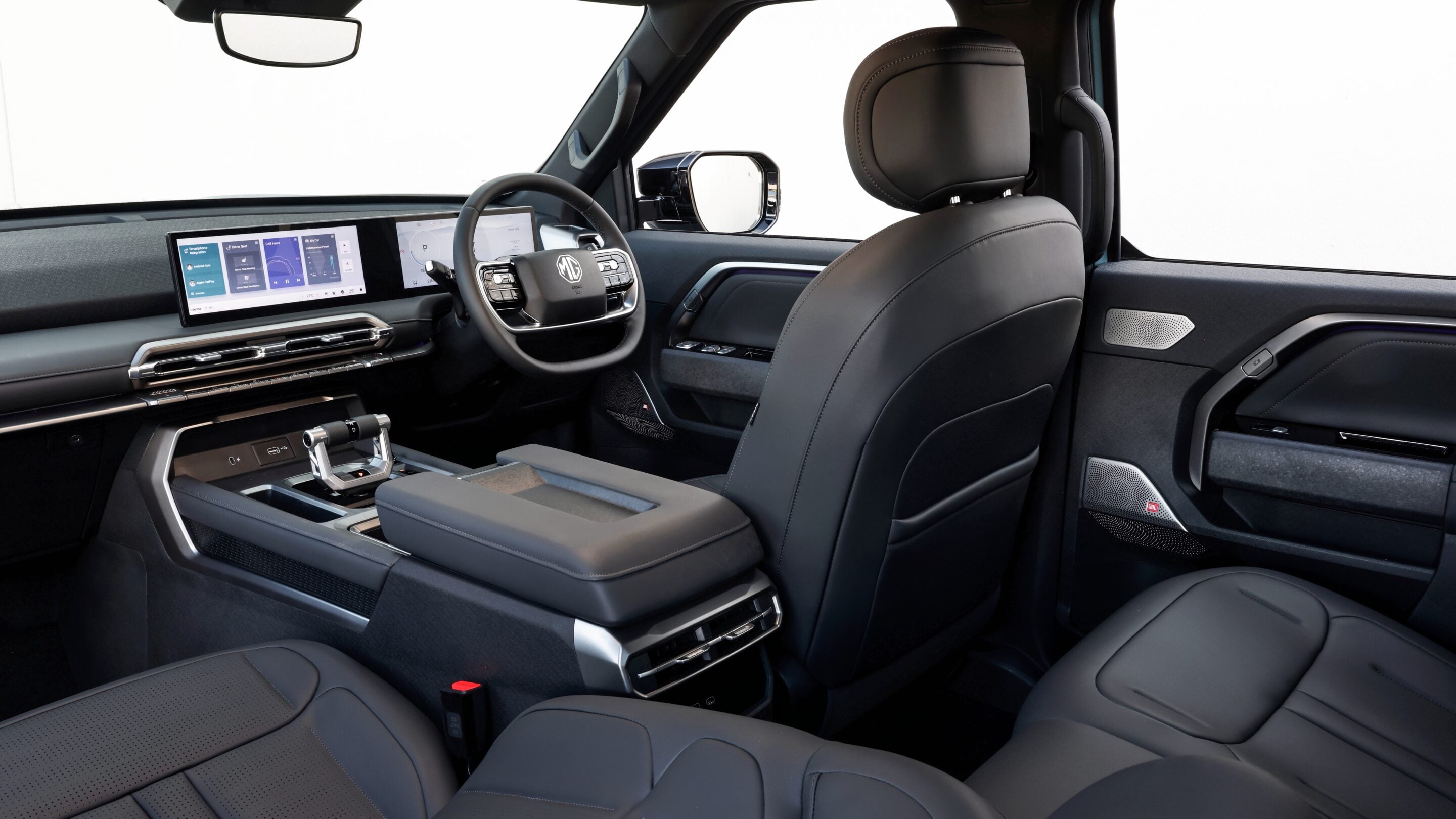
Leather upholstery is standard for the front seats, while the driver’s seat features heating, ventilation and massaging, with heating for both the front passenger seat and steering wheel. Other equipment includes a hands-free automatic tailgate and 360-degree camera, and MG says the MGU9 EV has achieved a five-star ANCAP safety rating.
“The MGU9 EV brings together the capability and utility people expect from a ute with the comfort and benefits of an electric powertrain,” said MG Motor Australia marketing director Dimitri Andreatidis.
“It’s designed to be used every day, whether that’s for work during the week, the school run or getting away on the weekend.”
Australian pricing, model grades and a firm launch date for the MGU9 EV are yet to be announced, but it’s expected to launch locally before the end of the year.
Ferrari’s 296 GT3 racer has had plenty of success on the track, but it also has to abide by the restrictions the class places upon it. The only rules governing the 296 Modificata, on the other hand, are the ones the Prancing Horse places on it – and the result is the ultimate evolution of the model.
Unveiled on Tuesday, Australian time, the Modificata has far less power than the roadgoing 296 – 537kW compared to 610kW – but Ferrari claims it’s a stunning three seconds a lap around the famed Fiorano circuit than the 296 GT3 Evo.

A fair whack of that speed is down to the Modificata’s aero package, which features a far larger rear wing, redesigned front splitter and bonnet, additional aero elements and an underfloor that generates even more downforce than the GT3 Evo. The ground clearance is so fine it looks like it’d be hard to slot a piece of A4 paper under the bodywork.
Created for the marque’s Club Competizioni GT program, Maranello’s newest plaything for the ultra-rich has had a raft of improvements thrown at its 2.9-litre twin-turbo V6. The powerplant gets upgrades to its turbochargers, intercoolers, rotating assembly, camshafts and induction line. There’s also a more muscular fuel system to slake the mill’s thirst.
All up, the changes make for 800Nm, with that peak power figure of 537kW arriving at 7500rpm. The oomph is fed to the road via a six-speed sequential transmission that has been tweaked with new dedicated ratios to “fully exploit the new operating range of the engine”.
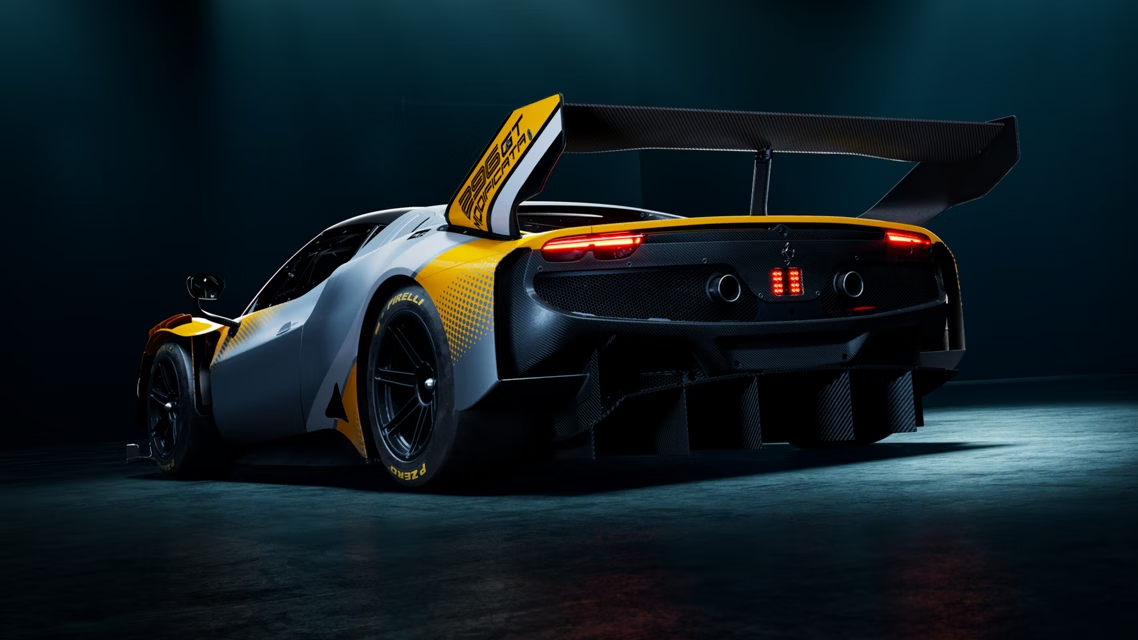
Somewhat unusually for a car of this type, the cabin features a passenger seat. There’s even a dedicated footrest for the front-row spectator, plus an intercom system so the driver can hear them begging to slow down.
The Modificata also gets an additional air intake to improve brake cooling and a list of options including a rear radar system to warn of possible overtakers and the ability to choose from the whole range of Ferrari Design Studio colours for the paintwork.
There’s no word on the price, but if you can afford one, Ferrari will throw in two years of participation in the Competizioni GT program, which takes in some of the most famous racing circuits on the planet, such as Indianapolis, Fuji and Spa-Francorchamps.
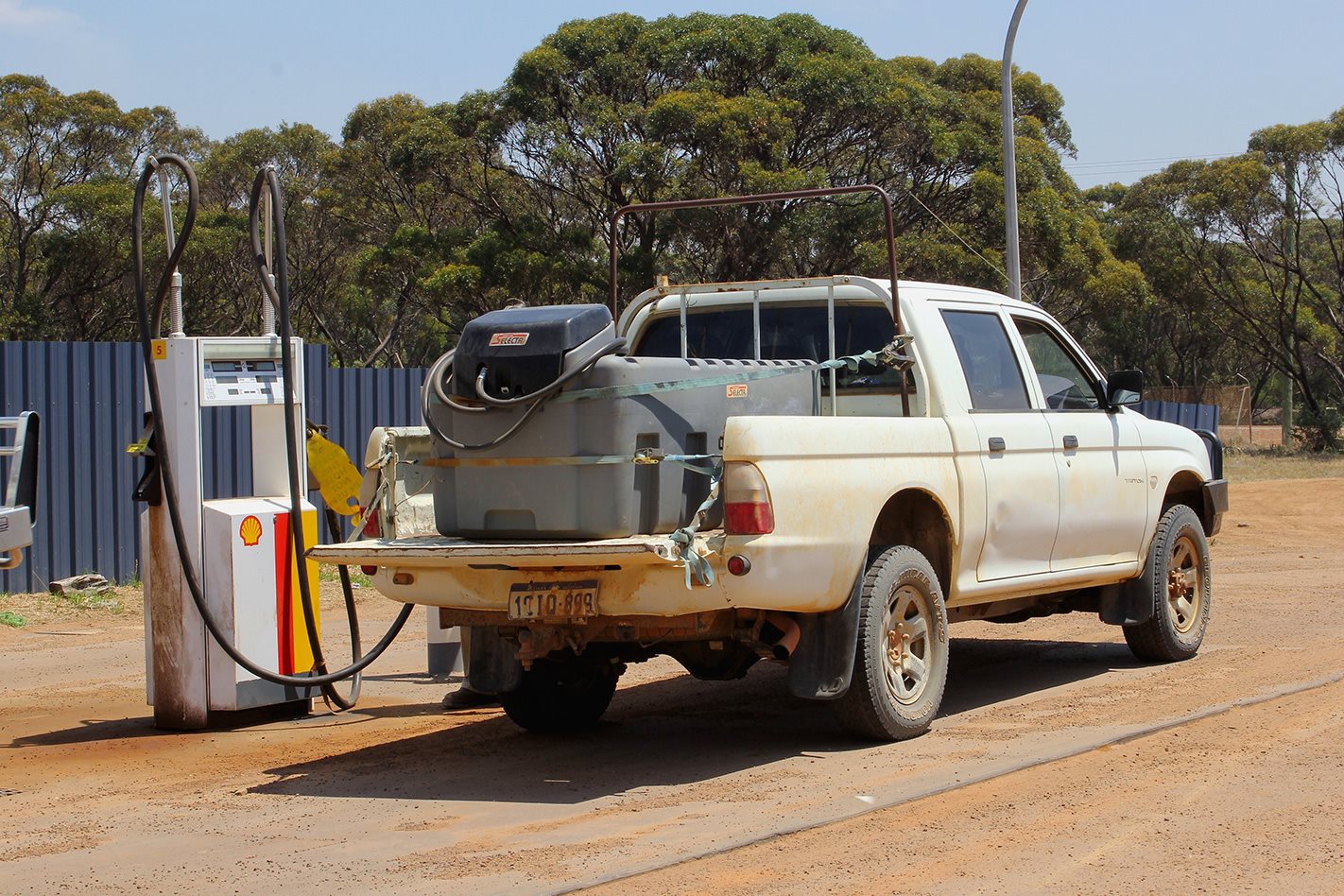
If you’ve ever briefly wandered away from your unlocked car while you’ve been filling up or just nipping into the shops for a sec, congratulations – you’ve broken one of Australia’s most obscure road rules.
In most parts of the country you can be fined for leaving your vehicle unattended and unsecured when you are more than three metres away, traffic lawyer Jahan Kalantar has explained.
“Remember, it is illegal to have your car unlocked in certain circumstances,” said Kalantar, who is the managing partner at Executive Law Group.
“If you are not in the car, if someone else is not in the car, if the car is further than three metres away from you, if your keys are in the ignition and the engine is on, if the engine is not on but the keys are in the ignition, even if the keys aren’t in the ignition but the window is more than two centimetres down, it’s illegal.”
The fines are nothing to sneeze at. Drivers in NSW and Queensland can be done for up to 20 penalty units, which equates to a $2200 fine in NSW and $3400 in the Sunshine State. That drops to about $625 for Victorians, all the way down to $50 for motorists in Western Australia.
“The reason we have this rule is because it’s hypothetically much easier to break into your car, insurance premiums go up, it causes issues, which is why police have the discretion to fine with this offence,” Kalantar added.
“We’ve seen it applied in silly situations, like someone is paying for some gas at the gas station, the cops come, and they charge them … Yes, I agree, it’s a bit ridiculous most of the time for that to be in place.”
The unattended law is far from the only road rule Aussie drivers get ambushed by. Others include beeping your horn to say goodbye to a friend, letting your dog sit on your lap when you’re behind the wheel, and letting passengers rest their feet on the dashboard.
New Toyota CEO Kenta Kon has used the complexity of the brand’s seats to illustrate how he wants to accomplish his mission of cutting costs and lowering the brand’s break-even volume – the amount of vehicles it has to sell before it makes a profit.
Kon, who was appointed to the position just five months ago, appears to be keen on driving down costs in ways that customers will have to work hard to notice, going by his remarks.

He told Automotive News that some features on Toyota products are unnecessarily intricate, explaining that the seats, for example, often use different materials to cover the front, sides and back – and customers don’t always need that level of detail and difference.
The same school of thought could apply to a huge range of features, from door handles to head rests. Toyota’s aim appears to be continuing to use high-quality materials, but not in the same number of varieties.
Kon said his drive to lower the break-even volume does have its limits, however. While the required volume has been increasing in recent years, the idea is not to hammer it down as hard as possible. He told the publication, “We’re not thinking the lower the break-even volume, the better. There will be a certain level that allows us to keep operating suppliers even in very difficult situations.”
Last month it was reported that Toyota had asked its parts suppliers to come up with cost reductions for the second half of the fiscal year, which runs from April 1 to the following March 31, which folds nicely into Kon’s mission statement.
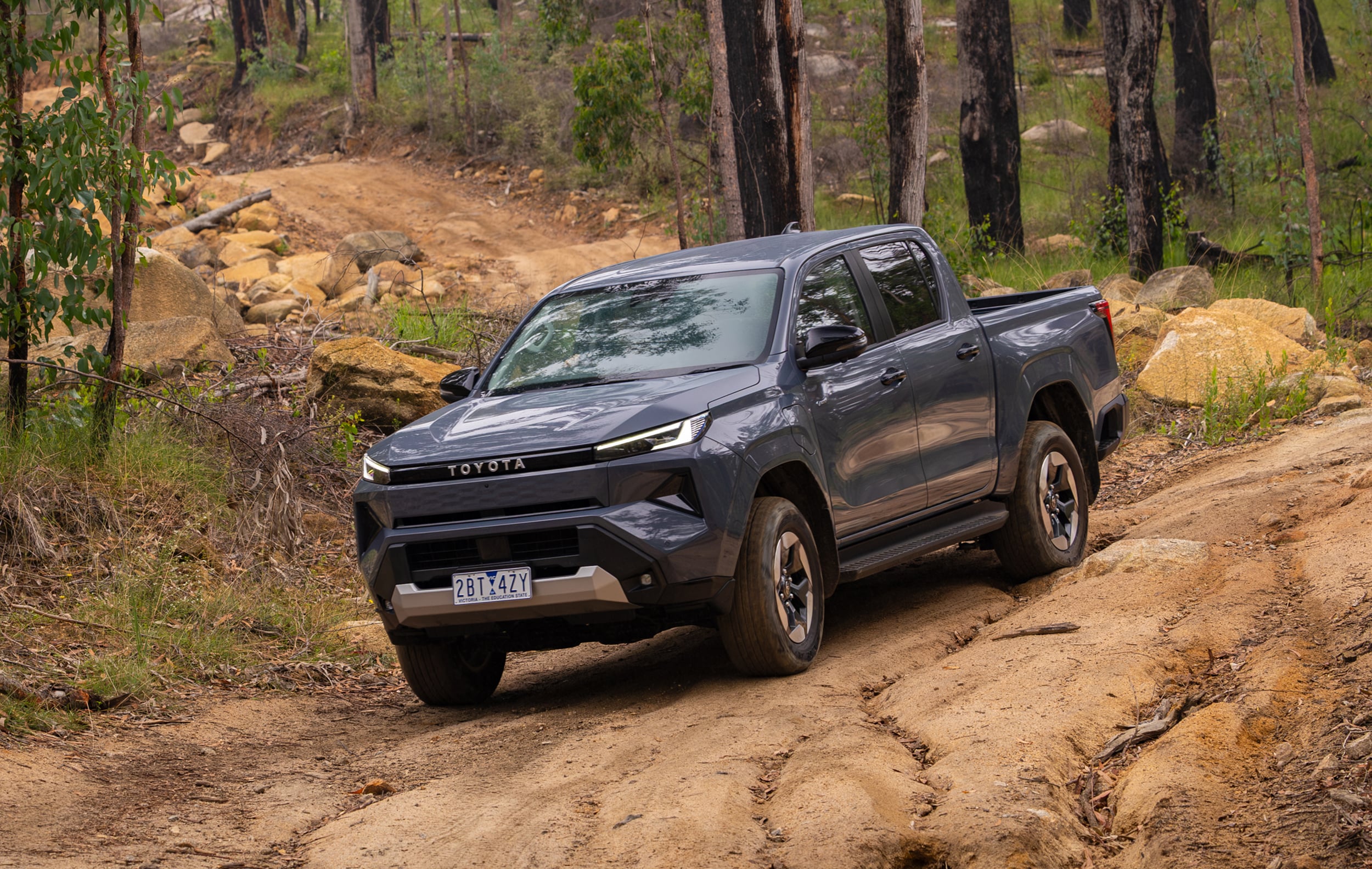
The news comes soon after another big Toyota cost-cutting measure was revealed: extending the average sales cycle of its mainstream models from seven to nine years. That means instead of making big changes to vehicles’ bodywork, chassis, drivetrain and other mechanicals, refreshes will centre more around substantial software updates.
Toyota’s shift comes after the launch of its Software Defined Vehicle (SDV) strategy, which allows the development of new and updated functions through digital technology alone. The move will also free up resources that can be devoted to the firm’s focus on electrification.
The SDV plan is a major part of the brand’s drive to increase profits from sources other than new-car sales by around 40 per cent by 2030. Over-the-air software updates for functions like powertrain calibration, safety systems and multimedia operations are driven through the company’s Arene software platform, described as “Toyota’s tugboat into the future” by CEO Hajime Kumabe.
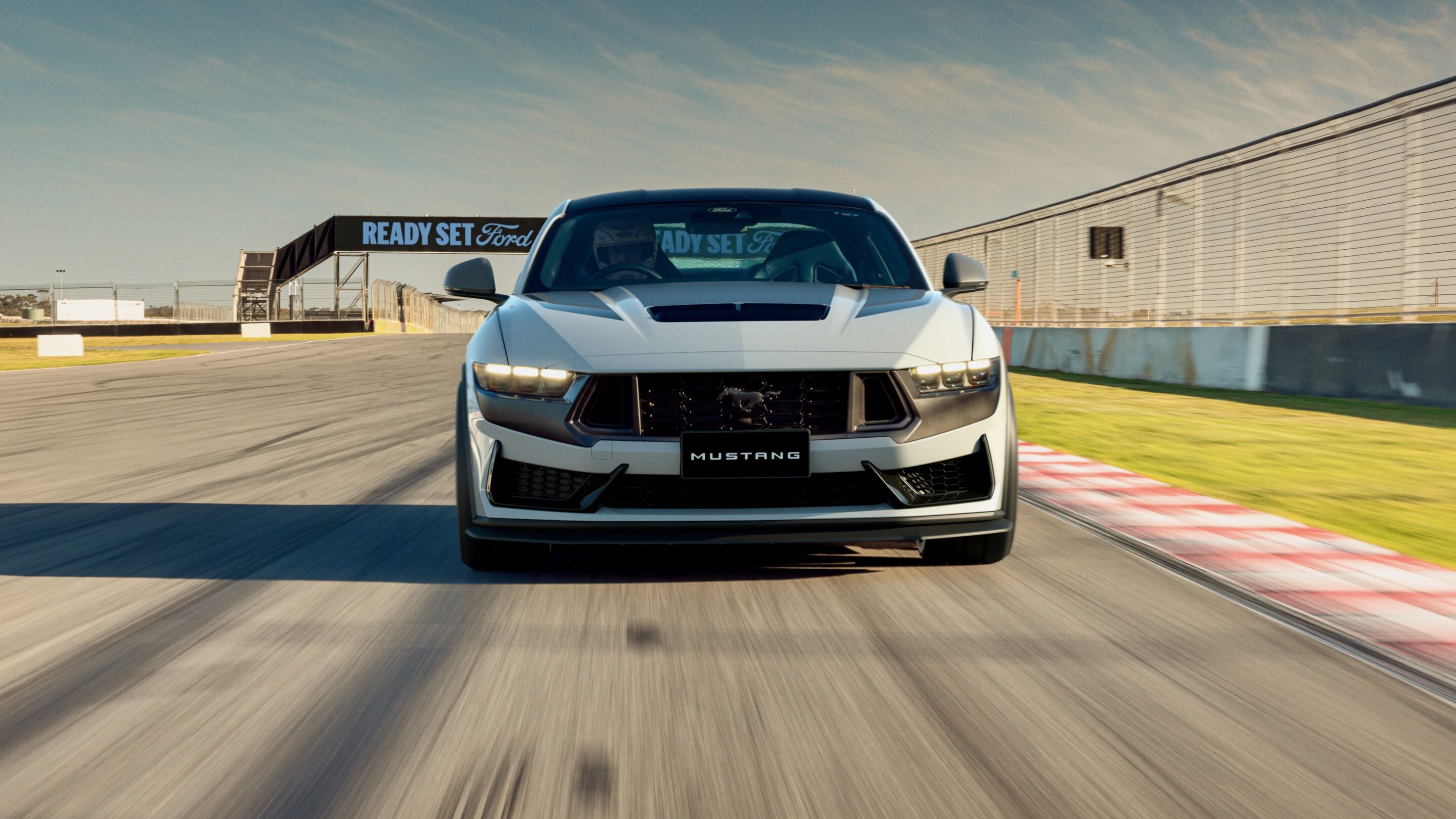
Ford has stopped selling Mustangs in Australia over safety concerns that have resulted in a huge recall affecting 7724 coupes and convertibles, 500 of which are still being held by dealers. The news continues the company’s wretched run with quality control issues and it’s the 20th Australian recall for the Blue Oval this year.
Ford Australia explained the issue in a statement reading: “Excess heat-shrink on a grounding eyelet in the wiring harness may affect certain vehicle functions, although no related issues or incidents have been reported in Australia.
“Ford will contact affected owners directly about rectification. There are just under 500 vehicles in dealer stock affected, and those will not be sold until the issue is rectified. Customer safety is Ford’s highest priority, and we apologise for any inconvenience caused.”
Owners of the affected Mustangs can keep driving them, however, and the parts required to fix the issue aren’t due in Australia until December. The official recall is expected to appear on the federal government’s website in the coming days, and Ford will make the repairs for free. Around 150,000 Mustangs have been recalled in the USA due to the fault.
As WhichCar by Wheels pointed out in a feature last month, Ford has been hammered by quality problems for several years, and the firm’s efforts to correct the slide have borne little fruit. This is the second recall for Mustangs in the last three weeks, with another on August 27 for 4955 cars due to a potential fault with windscreen wipers.
Ford is currently on pace to break the mark of 25 Australian recalls it set in 2025, following on from 17 recalls in 2024. The poor quality control Aussie customers have been dealing with has been mirrored around the world, too.
The Blue Oval recorded an industry-record 153 recalls globally in 2025 with almost 13 million vehicles affected. Stellantis, which owns 16 brands including Jeep, Ram, Dodge, Fiat, Alfa Romeo, Chrysler and Opel, had just 53 recalls affecting 2.7 million vehicles in the same period.
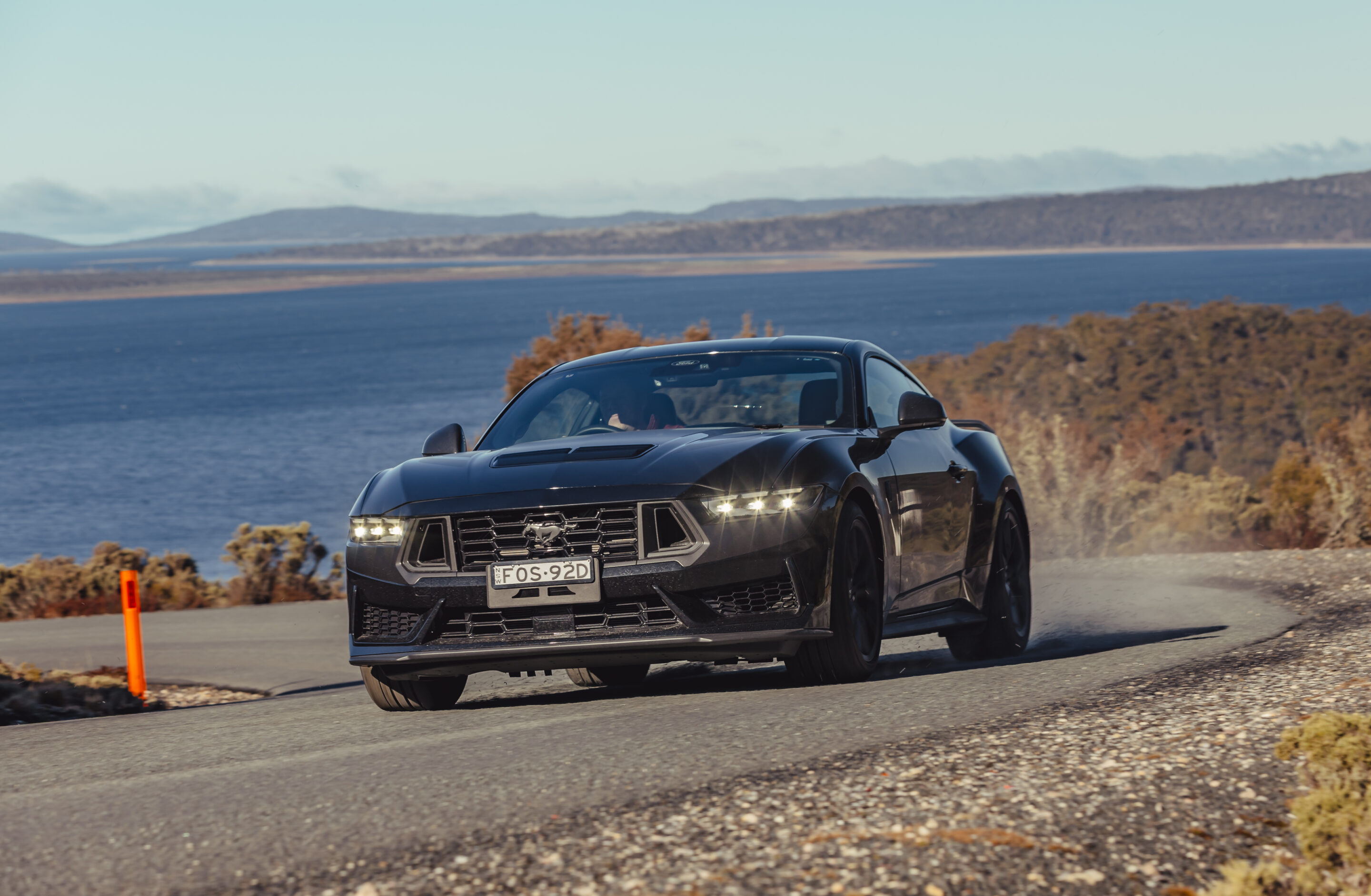
By June, the marque had issued 50 recall notices involving 11.2 million vehicles, meaning there’s a chance 2025’s record could be broken in terms of the number of cars affected. Ford also had the highest number of recalls in the industry in 2022 and 2023.
Ford Australia CEO Fadi Mawal said people are taking the wrong lesson from the wave of recalls and praised the company’s reaction to the problem. “People interpret it differently and say ‘Ford is doing more recalls’,” he said. “What we’re doing is … proactive, and when we find something, we let the customers know. We are protecting the customers.”
Mawal also denied the recent move to extend Ford’s Aussie warranties from five to seven years – as long as they have all servicing done by official Ford dealerships – came as a reaction to the ongoing quality problems.
Skoda’s new Epiq might sit at the bottom of the Czech brand’s expanding electric SUV family, but you’d never know that once you experience how it drives and the amount of practicality that’s been shoehorned into it. Make a list of what you’d like to see in a small SUV and the newcomer will tick practically every box.
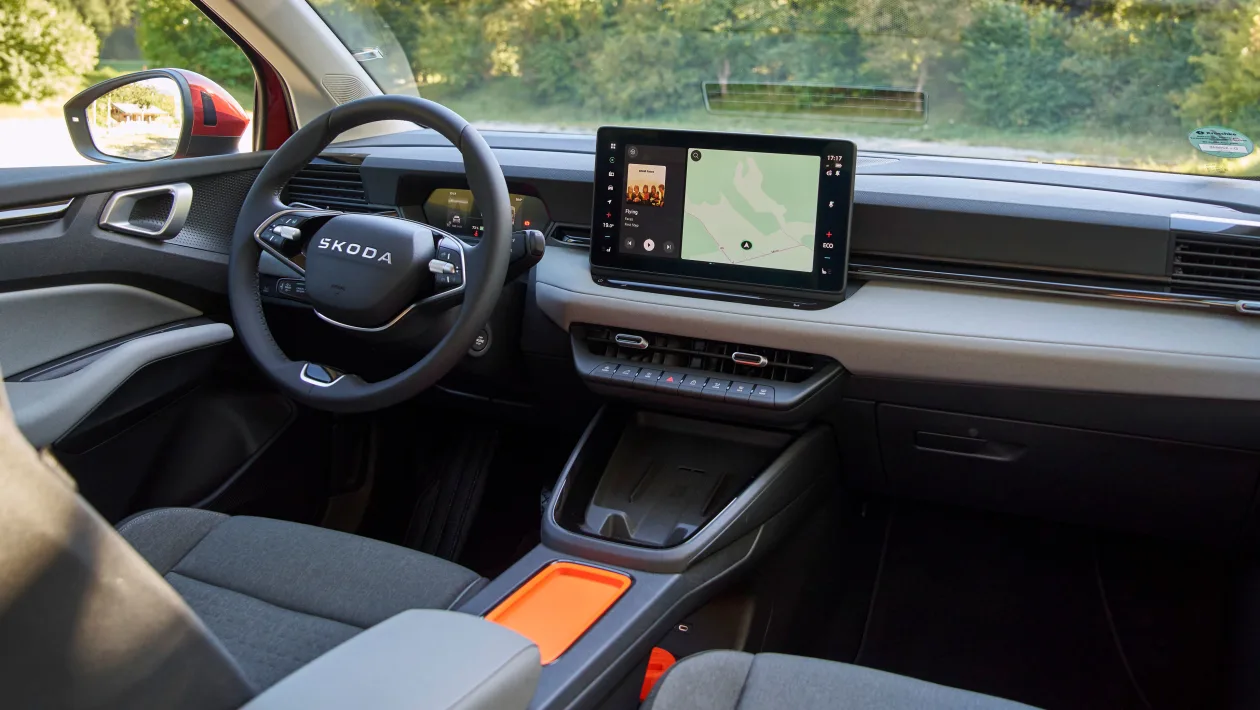
The Epiq is effectively a battery-powered alternative to the Kamiq and shares its MEB+ architecture with the Volkswagen ID. Polo and Cupra Raval. Inside, there’s an obvious family resemblance to the larger, critically acclaimed Elroq. A 13-inch central touchscreen is joined by a 5.3-inch digital instrument display, while physical shortcut buttons provide quick access to frequently used functions.
The Android-based infotainment system is responsive and supports downloadable third-party apps, while wireless Apple CarPlay and Android Auto are standard. All up, it’s a better set-up than you’ll find on other Skodas. Climate controls are less convenient, with most functions accessed through the touchscreen rather than dedicated switches.
Cabin materials include plenty of hard plastic, as you’d expect from a relatively affordable EV, but it actually gives you a more upmarket impression thanks to the clever use of fabrics, recycled materials and metal-effect trim.
Practicality is one of the Epiq’s trump cards. Adults up to six feet tall can fit comfortably in the rear, while three Isofix mounting points cater for families. Boot capacity is an impressive 475 litres – five litres more than the Elroq – and that expands to 1344 litres with the rear seats folded. There’s also a 25-litre storage compartment beneath the bonnet.
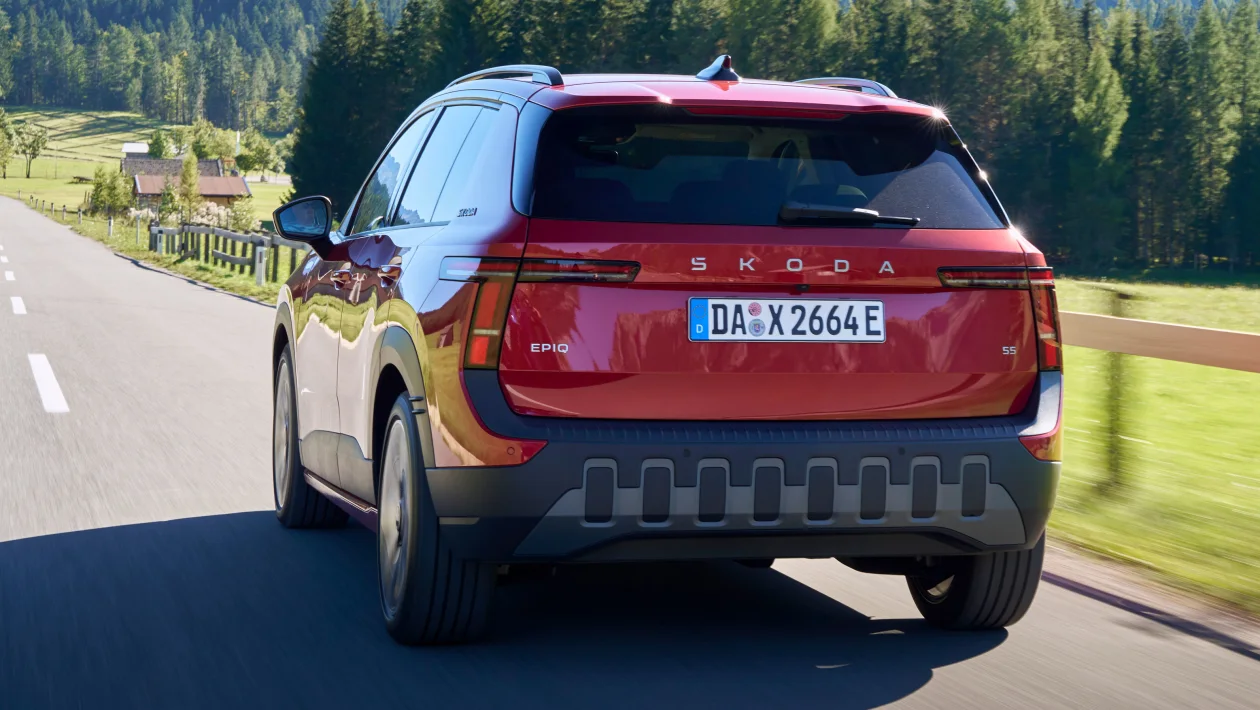
Skoda’s trademark practical touches include an umbrella hidden in the driver’s door, an ice scraper and a charging-cable bag that attaches to the rear seatbacks. Outside, it has an air of rugged quality with its chunky bumpers, roof rails and abundance of plastic cladding, but it teams that with contemporary styling like the ‘Tech-Deck Face’ it shares with the Elroq.
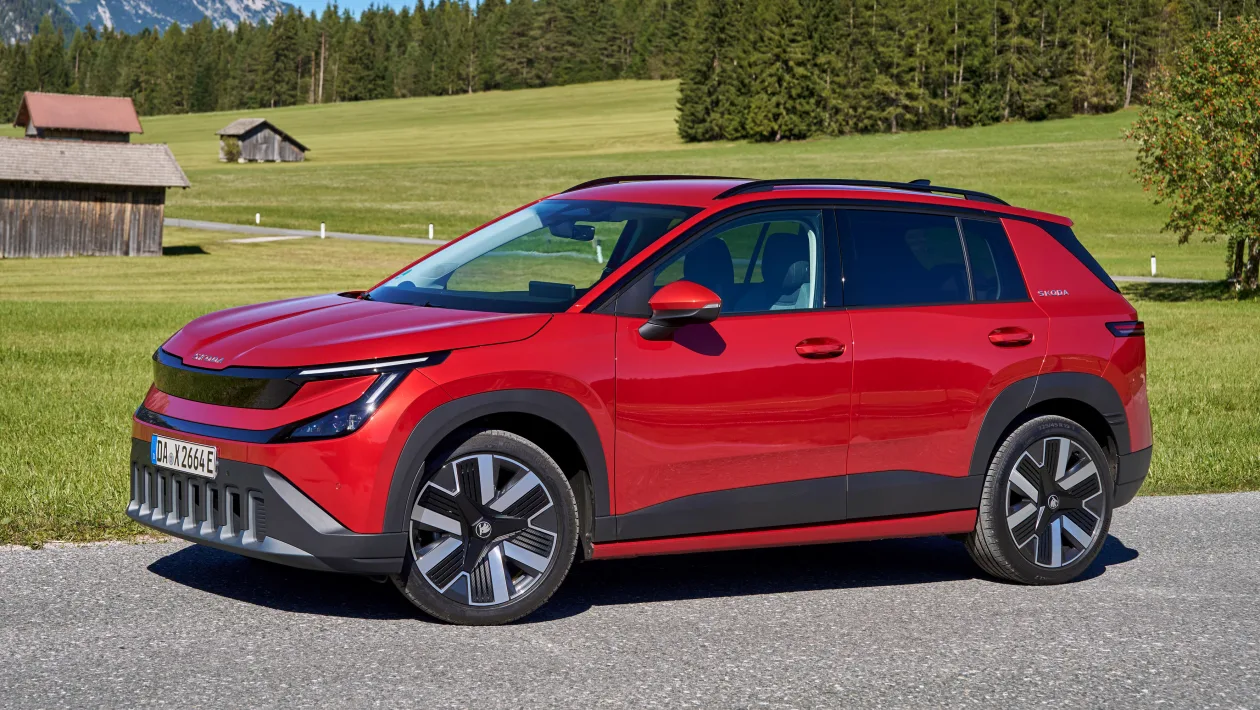
Two battery configurations have been unveiled. The entry Epiq 40 uses a 37kWh lithium-iron-phosphate battery and is expected to deliver approximately 305km of range. Its 99kW electric motor should propel it from 0–100km/h in about 10 seconds.
The Epiq 55 steps up to a 52kWh nickel-manganese-cobalt battery, providing up to 438km of claimed range. During testing, energy consumption averaged an impressive 13.2kWh/100km, despite considerable higher-speed driving. Maximum DC charging power is 105kW, with a 10–80 per cent recharge taking a claimed 24 minutes.
Performance is also considerably stronger in the Epiq 55. Its 155kW motor delivers 0–100km/h in 7.4 seconds, providing ample acceleration for overtaking. The test car was put through its paces with lots of highway cruising, but still returned an outstanding mark of 13.22kWh/100km.
On the road, the Epiq feels polished rather than overtly sporty. Steering has reassuring weight, the brake pedal provides consistent feedback and strong regenerative braking allows near-one-pedal driving around town.
Its suspension is firmer than that of the larger Elroq and Enyaq, but remains well controlled and dealt easily with the potholes encountered during testing in Austria. Some vibration was noticeable over rougher surfaces, along with wind and tyre noise at higher speeds, but those are the only complaints.
Australian availability, specifications and pricing have yet to be confirmed, but on first impressions the Epiq has the ingredients to become one of Skoda’s most compelling EVs yet – particularly for buyers who value space, efficiency and everyday usability over outright driving excitement.
It’s not quite the revolving carousel of number plates Q installed on James Bond’s Aston Martin in Goldfinger, but an American driver has still stunned a police officer with a cunning device designed to make sure they never paid tolls.
A California Highway Patrol cop first noticed something was amiss with the Volkswagen Jetta when it was observed driving in the express lane just north of San Francisco with no visible rear plate recently.
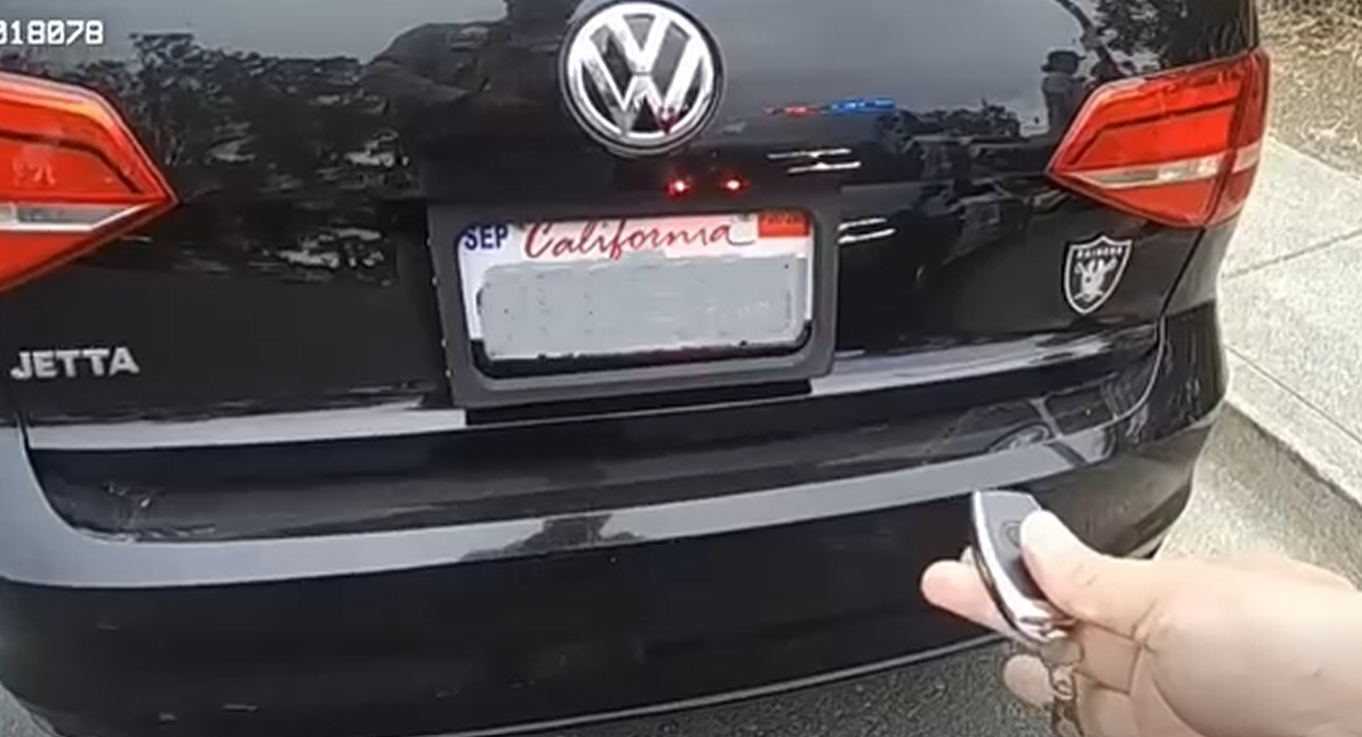
Dashcam footage shows the patrol car start to follow the VW and a few kilometres later the number plate had mysteriously reappeared. Naturally, the officer pulled the car over, and the driver fessed up.
“Upon making an enforcement stop, the driver, sole occupant admitted to using the illegal device for one specific reason: to intentionally evade paying Express Lane and Bay Area bridge tolls,” the Solano branch of the CHP posted to Facebook.
The CHP’s video shows the officer operating the device by pressing a button on what appears to be a key fob. Activating it makes a black screen rise up from the bottom of the licence plate holder and completely obscure the registration. Another push sees it sink back down out of sight.
“It is strictly illegal to operate a vehicle with a switchable license plate frame, flipper or any product intended to obscure the reading or recognition of a license plate,” CHP Solano explained, adding that the base fine for doing so is US$250 ($350) but that amount “skyrockets” once state and county levies are added.
“Trying to cheat the toll system isn’t fair to the thousands of Solano County commuters who pay their share every day. Save yourself the trouble, the traffic stop and the hefty fines,” the CHP warned.
The WeMoney finance app has introduced a new tool that lets Aussies use their own motoring spending patterns to discover how much they’ll save if they switch from petrol and diesel to electric cars.
From September 15, the new Bowser to Battery feature on the company’s app will compare the cost of running a motorist’s current vehicle with the cost of keeping their EV of choice on the road. Drivers simply become a WeMoney member, enter their registration details or the model of their car and their driving details, then choose the electric vehicle that has caught their eye.
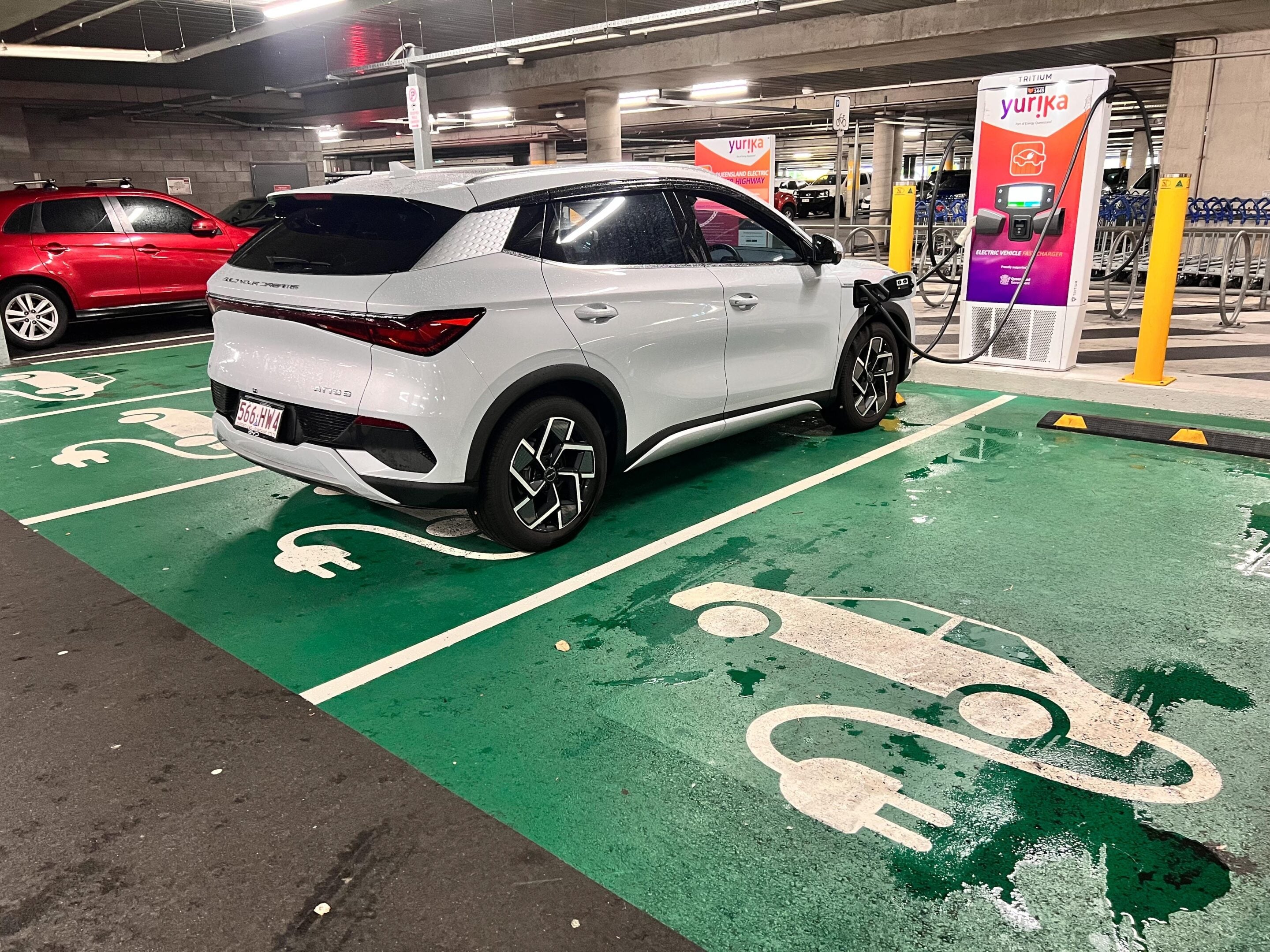
Their current car’s costs are broken down into fuel, insurance, servicing, repairs, tyres and even parking. When it comes to the EV, WeMoney’s new feature allows users to adjust a raft of categories including kilometres driven, the charging mix they would like to use, how long they want to keep their new car and even electricity tariffs.
WeMoney says its member data shows Aussies who are switching away from internal combustion vehicles are making huge savings. For example, those who spend an average of $48.49 on EV charging per month are saving $166.39 compared to those who fill up with diesel – a stunning cost reduction of 77.4 per cent.
“Australians are switching to electric faster than anyone predicted, and most are making the biggest purchase of the decade on a guess. Bowser to Battery replaces the guess with your own numbers,” said WeMoney founder and CEO Dan Jovevski.
The new feature comes soon after VFACTS figures for August showed that battery-electric vehicles out-sold petrol, diesel and hybrid cars in Australia for the first time.
New car sales data from the Federal Chamber of Automotive Industries and the Electric Vehicle Council revealed that Australians bought 27,078 new electric vehicles in August, a 24.9 per cent share of the overall new car market, which totalled 108,760. Sales of petrol-powered vehicles amounted to 25,824 (23.7 per cent), while diesel accounted for 23,608 sales (21.7 per cent). Hybrids (18,662) and plug-in hybrids (10,591) made up the balance.
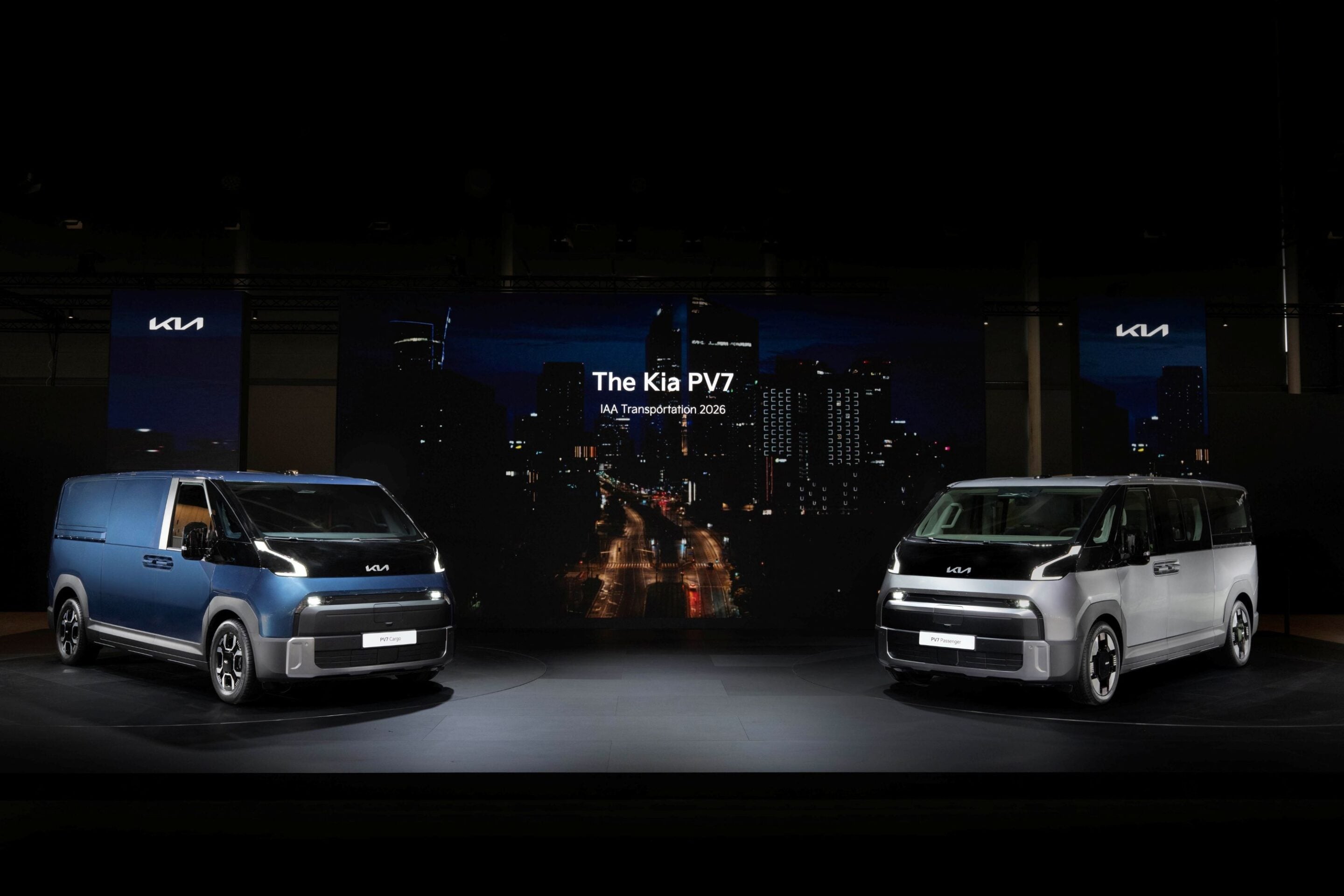
Kia has unveiled its new PV7 electric van at the IAA Transportation show in Hannover, confirming the second member of its dedicated Platform Beyond Vehicle (PBV) family will reach Australia in the fourth quarter of 2027.
Following the smaller PV5, the PV7 is aimed at a broader range of commercial and passenger applications, with Cargo and Passenger versions planned. Australian pricing, specifications and model grades remain under wraps, but Kia Australia says the PV7 will undergo its local ride and handling development program before launch.
At 5350mm long and 1995mm wide, with a 3500mm wheelbase, the PV7 is substantially sized and uses Kia’s dedicated E-GMP.S electric architecture. Two nickel cobalt manganese battery packs are available globally, with capacities of 71.5kWh and 96.2kWh.
Depending on configuration, the front-mounted electric motor produces up to 200kW and 420Nm. Front-wheel drive will initially be standard, although Kia plans to introduce an all-wheel-drive version later. The Long Range Cargo model has a claimed WLTP driving range exceeding 460km.
An 800-volt electrical architecture allows the battery to be charged from 10 to 80 per cent in the mid-20-minute range using a 350kW DC charger. The PV7 also introduces dual charging ports for Kia, comprising a front AC/DC connection and an optional rear-side AC port.
Cargo versions prioritise carrying ability, with the Cargo Long providing 6.1 cubic metres of space and the High Roof increasing that to 8.0 cubic metres. Payload reaches 1165kg in the Long and 1200kg in the Compact, while the Long’s 550mm loading height is designed to simplify loading.
Passenger versions can accommodate up to nine people in global markets, with removable and adjustable seating configurations. Seven-seat models feature long-rail removable seats, while rear climate control, USB-C charging and power sliding doors are among the available equipment.
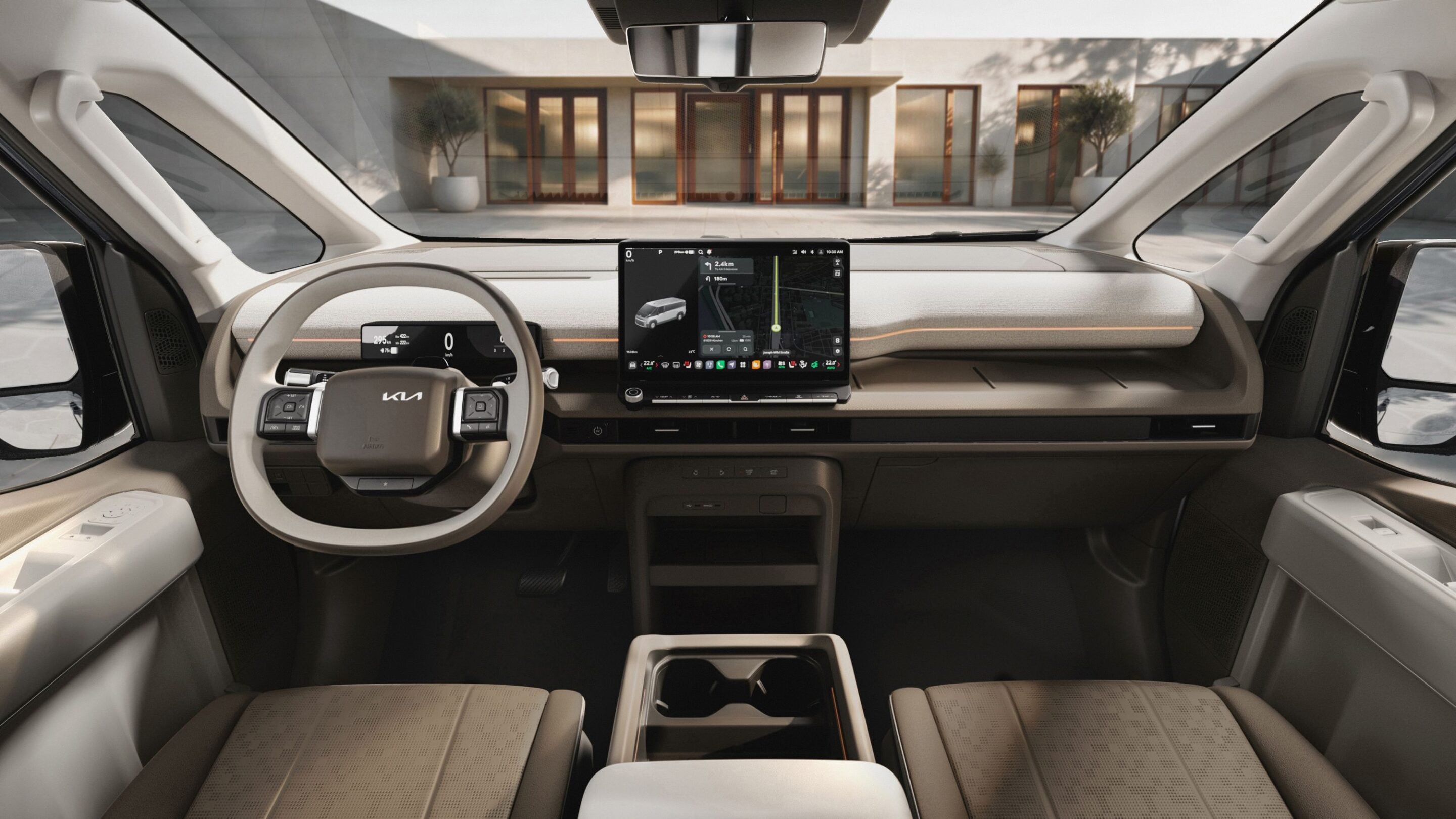
Technology includes Kia’s Android Automotive-based Pleos Connect system, over-the-air updates and an AI voice assistant, while Vehicle-to-Load capability can power external tools and equipment.
Kia ultimately plans 23 PV7 derivatives, spanning Compact, Long and High Roof Cargo models, Passenger versions, a Chassis Cab and specialised conversions. The even larger PV9 is scheduled to follow in 2029.
